Published: 12/16/2025 - 10:00 AM
All parents want their children to grow into confident adults ready to reach their full potential. Teaching social skills to children at preschool and kindergarten ages is fundamental to reaching that goal. By learning these vital skills, your child can learn to make friends, communicate effectively, and understand their own and others' feelings.
Understanding Social Skill Development for Kids
As your child progresses through preschool and kindergarten, you'll begin to notice distinct behavioral patterns, including communication with peers, participation in activities, and emotional management. When supported properly through social skill development, they can achieve many positive outcomes, including strong academic performance and fewer behavioral issues.
In one study, kids with improved social skills performed better in school and had fewer emotional problems compared to children who struggled with social-emotional competence. By observing and understanding your child's social development, you can help them build foundational social skills.
At preschool and kindergarten age, kids typically exhibit specific social skills:
- 3- and 4-year-olds: Children start to interact with their peers and play side by side, sharing their toys and imitating one another. At this age, parallel play is common, where children play near each other but may not directly interact, which is a crucial step in developing social awareness.
- 4- and 5-year-olds: Kids start considering other children's feelings, helping their peers and taking turns with toys and other activities. They begin to engage in more cooperative play, understanding that their actions can affect others and showing empathy in their interactions.
- 5- and 6-year-olds: Children start building friendships focused on shared interests, participating in activities and dealing with small conflicts. They learn to navigate the complexities of social relationships, developing skills in communication, compromise and conflict resolution that are essential for forming lasting bonds.
The Long-Term Benefits of Child Social Skills
Teaching preschool social skills and best behaviors will benefit your child in life and academics in the future. By starting early, you can support them through kindergarten, grade school and beyond. These are fundamental skills that last a lifetime, bringing several benefits:
- Expressing emotions: Children who can share, take turns and work through problems reasonably are better at expressing their emotions with friends and family.
- Comfortably making friends: Building friendships at a young age encourages curiosity and a stronger sense of belonging.
- Improving school performance: Factors such as positive relationships promote academic achievement as students progress through their educational journey.
- Supporting well-being: Early social skills development encourages low stress levels, better mental health outcomes and overall life satisfaction.
- Bouncing back from challenges: If a challenging situation presents itself, children equipped with appropriate social skills can problem solve and confidently reach out for help. They also have better resilience and can move on from setbacks.
- Showing fewer behavioral problems: Children with empathetic personalities and a willingness to cooperate with others are more likely to experience fewer behavioral issues as they grow older.
How to Build Children's Social Skills With Play
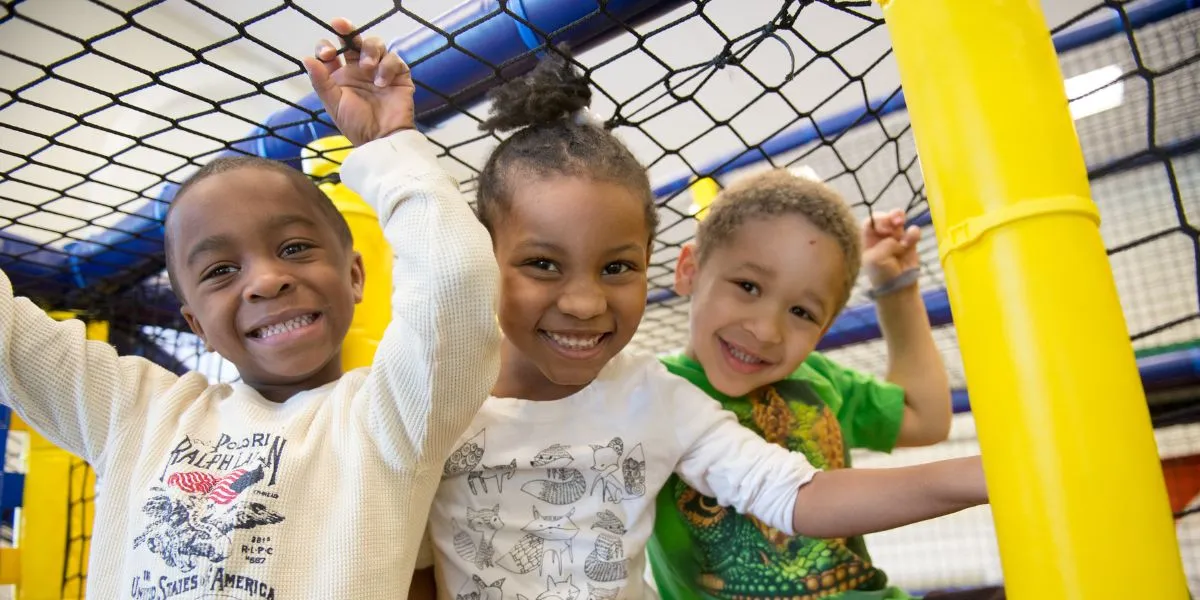
Play time is a key daily activity where kids learn how to behave and interact with others. When children in preschool use building blocks, play hide and seek or participate in imaginative play, they learn to share, understand others' emotions and solve problems. As your child grows older, their playtime habits will change.
Here's how you can make playtime at home more effective for social skill development:
Incorporate Guided Pay
Set aside 30-60 minutes each day for guided play, where you supervise without taking control. Let your child choose the activity, but be present to facilitate interaction and problem-solving. This allows your child to develop essential behaviors for growth.
For example, if your child is struggling to build a tower with blocks, you might encourage them to work with you, a friend or a sibling for help. With your subtle support, they'll feel confident enough to make that decision on their own in the future.
Focus on Emotional Intelligence
Talking openly about feelings and recognizing different facial expressions from an early age can help children connect more effectively with others and form lasting friendships. During playtime, you can make an effort to label your child's emotions.
For instance, if your child is frustrated because they can't fit a puzzle piece, you might say, “I see you're feeling a little frustrated. Let's try to figure it out together.” Or, if they're proud of a drawing, you could say, “You must be so happy with the picture you drew,” to acknowledge their emotions.
Encourage Problem-Solving
A safe space to deal with challenges is another key benefit of playtime and social-emotional development. Learning how to address certain situations, such as repairing a game, waiting their turn to play with a toy or mending friendships after disagreements, teaches communication and patience. When conflicts arise during playtime, guide your child through the problem-solving process.
How to Teach Social Skills to Kids Using Role-Play
Encouraging your child to use their imagination through storytelling and role-play allows them to think about other people's viewpoints. During the early childhood stages, promoting imaginative storytelling by encouraging children to act out scenarios helps them express their feelings and understand others' emotions more openly. Using props like puppets and dressing up in costumes allows children to grasp the characters' problems and emotions, which translates to real life.
Try introducing these fun and explorative approaches at home:
- Read children's books with deeper storytelling themes and ask your child their thoughts about the character's feelings.
- Use props, puppets and stuffed animals for reenacting scenarios from real life, books, movies or shows.
- Find opportunities to role-play scenarios in daily activities. For example, if your child spilled their drink at lunch, you might role-play different responses to help your child learn about problem-solving.
- Elevate storytime by talking through how your child may feel during various scenarios in a book. This is a prime opportunity to learn about different emotions.
Incorporating Physical Movement for Social Skills
Physical activities and relaxation techniques also help in developing social-emotional skills. Introducing routines with a combination of movement, playtime and relaxation promotes better social-emotional development for children. Kids feel comfortable expressing their feelings and working together on tasks. Adding a combination of indoor and outdoor activities has been shown to increase empathy and social skills.
Consider adding the following movement and relaxation techniques to your child's routine:
- Spend time walking through nature and allowing your child to explore freely outdoors.
- Encourage calming and relaxation movements after physical activity, such as yoga, deep breathing, and stretches.
- Choose physical team games that require children to work together toward a common goal, rather than competing against each other.
- Combine physical activity with imaginative play by acting out stories together.
Tips for Teaching Social Skills for Children at Mealtimes
Teaching table manners as early as possible in your child's development is a best practice for building social skills in public settings. Mealtimes are opportunities for your child to learn about politeness and how to behave appropriately.
Waiting for everyone to finish their food before leaving the table, saying please and thank you, and not interrupting others allows your children to feel confident during these social interactions. Below are some tips to try at home:
- Display best behaviors: Since children can mirror their parents' behavior, practicing these techniques yourself will encourage your child to do the same.
- Give praise for good manners: When your child says please and thank you at the dinner table, acknowledge their good behavior. If they fail to practice good manners, offer a reminder about the importance of saying please and thank you.
- Incorporate role-play: Use role-play and come up with scenarios to prepare them for eating meals in social settings. Pretend you're at a cafe or a restaurant and teach them how to sit correctly at a table. As they get older, you might also explore how to order from a menu.
- Apply table etiquette: As well as saying please and thank you, instill other good manners for the dinner table. For example, teach your child how to use a napkin properly, sit still in their chair, and chew food with their mouth closed.
- Keep devices away: Leaving devices like tablets in another room allows you to practice conversation techniques with your child.
- Tidy up after dinner: Getting your child to help out with setting and clearing the table teaches them responsibility. It also helps your child learn the importance of teamwork and cooperation.
Social Skills and Overcoming Behavioral Challenges
Some children find socializing with their peers and building relationships challenging. If your child demonstrates certain behaviors, you can explore different methods to encourage growth. If you're concerned about your child's development, it's recommended to speak with a health professional.
Trouble With Taking Turns
Preschoolers and kindergarten children often struggle at first to take turns and share with their peers. Sharing and taking turns require emotional skills and understanding how their peers may feel. Working on these behaviors early can help improve your kid's social skills as they grow older.
- Incorporate sharing behaviors during various activities with your child.
- Praise your child for their sharing behaviors.
Coping With Tantrums and Outbursts
Although tantrums and emotional outbursts are a regular part of growing up, they can be difficult for parents to manage. As children develop their emotional skills and learn about different emotions, they can better control their feelings and form positive relationships.
- Remain calm even in challenging situations to showcase good behavior.
- Use particular techniques with your child, such as counting to 10 and deep breathing.
- After a few moments, talk through your child's emotions with them.
Struggling to Make Friends
Your child may struggle to make new friends in preschool and kindergarten. Structured and guided social play activities can help improve your child's ability to deal with social interactions and form friendships with peers.
- Use role-play as a technique to practice social interactions.
- Praise your child for starting positive interactions with other children.
- Maintain a playdate schedule to help your child develop their social skills.
Encouraging Empathy
Empathy is a behavior that builds over time and helps maintain positive social relationships. Children communicate confidently with their peers when they understand the emotions and feelings of the people around them.
- If you have storytime before bed, discuss the book's characters' emotions and ask questions.
- Emphasize positive behaviors and empathy within your family and in your daily interactions with others.
- Maintain an open dialogue with your child where they feel comfortable speaking about their feelings with you.
Addressing Aggressive Behavior and Low Energy
If your child is exhibiting quiet behavior or hesitancy to participate in activities, it may indicate that they're having trouble navigating their emotions and social settings. Children often express their feelings through actions.
- Monitor emotional points when your child may be hungry or overstimulated.
- Create playdates with small groups or just one other child, rather than large groups.
- Build a consistent daily routine to help your child stay focused and feel safe.
Explore the Greater Philadelphia YMCA's Child Care Services
The Greater Philadelphia YMCA recognizes the need for children to learn essential social skills early in life. Our child care programs offer supportive environments for preschool and kindergarten children in the Greater Philadelphia Region to play, grow and reach their full potential. Our preschool and kindergarten child care programs include:
- Preschool Program: Children develop preschool social skills through group play, academic exercises and music.
- Part-Day Preschool Program: This interactive program is aimed at children between 2 and 5 years old with a focus on school-readiness.
- Toddler Program: Toddlers can learn key social skills through concrete sensory interactions, meaningful play and active exploration.
- State Access Pre-K: The Y is proud to offer free preschool programs to students throughout the Geater Philadelphia Area where every child can learn while growing to their fullest potential.
Our programs are led by qualified and experienced teachers to deliver the best education and support for your children. Want to learn more about our programs? Speak to our dedicated team to discuss the right child care program for your family.