
Published: 06/03/2026 - 8:00 AM
There's nothing like watching your little ones enjoy themselves. As parents and caregivers, it's one of life's joys. Swimming is a popular activity for children and a great way to get your kids active, but how do you know when your child is ready to start lessons?
While every kid reaches developmental milestones at their own pace, the Academy of Pediatrics (AAP) has guidance for each age group. Familiarizing yourself with these recommendations is a great way to assess when it's time to start swimming lessons.
Why Swimming Lessons Matter
Whether your child is eager to learn or feels uncertain about being in the water, swimming offers key life skills that can pay off now and in the future. Examples include:
- Increased swimming ability for safety and confidence when in and around the water.
- Developed physical fitness, coordination and strength during formative years.
- A sense of discipline, perseverance and accomplishment for learning something new.
- Improved future opportunities for fun water activities and social interaction.
The AAP states that swim lessons provide an additional layer of protection for kids, alongside supervision and safety barriers.
An Age-by-Age Guide to Getting Started
The following guidance can help you determine if and when your child is ready for swim lessons.
Under 1 Year Old
Think of this stage as a way to build a fun association between your child and the water. Those first moments between a baby and a parent in water are priceless. It ensures that you experience it together, before actual lessons begin.
While formal lessons are not required at this age, it's a great time for some parent-child water play.
Ages 1 to 3 Years Old
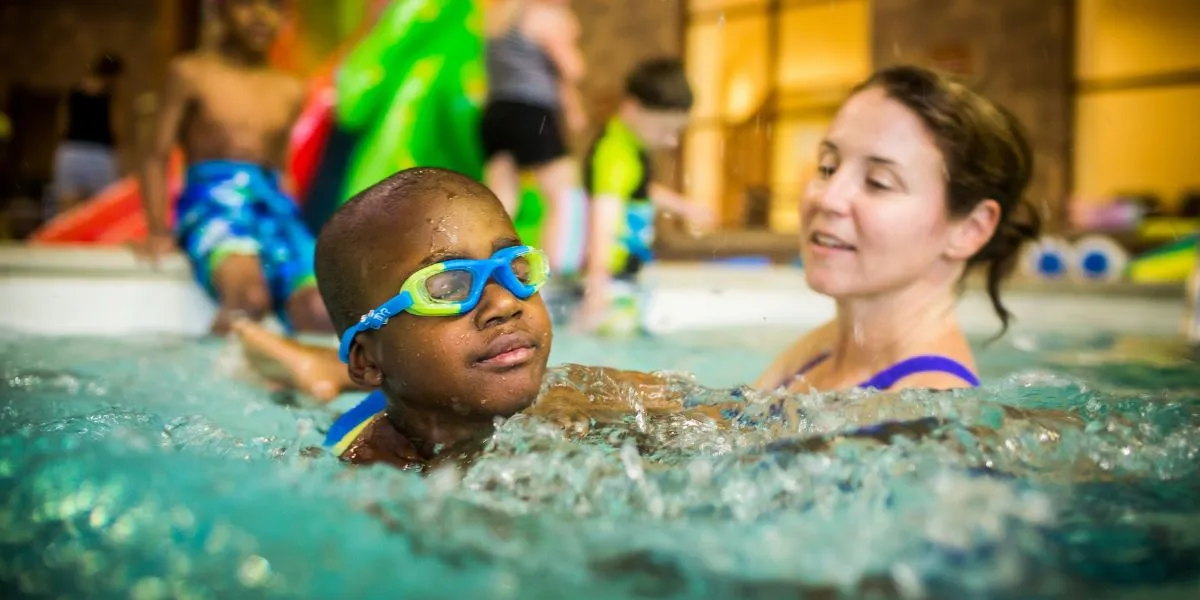
Here's where parent-child lessons truly begin. The AAP recommends that children start formal lessons at 1 year to increase protection around the water. Toddlers who take part in mixed-age or group settings can also strengthen their social and verbal skills as they learn.
The Y offers parent-child swimming programs for children ages 6 months to 3 years. These friendly, supportive classes include introductory skills like learning to float with support and kick in the water. They will also become more comfortable with having water on their face.
Ages 4 to 5 Years Old
These years represent the sweet spot for structured lessons, and many kids are excited to try a new activity. Children between these ages are also typically more ready to separate from their parents in the water.
The Y's Swim Basics program provides fun, encouraging swimming lessons that include:
- Learning how to float unassisted
- Developing treading water skills
- Getting to the wall or an exit point in water
- Foundational water survival skills
Your child will likely hit many key milestones in their swimming journey during these years, especially as they become more independent learners.
Ages 6 and Above
For parents of children age 6 and above, it's important to understand that it's never too late. According to the AAP, most kids in this age range are capable of learning basic strokes, including the front crawl. Studies even support that this age group can strengthen motor skills and cognitive abilities by learning swim strokes.
The Y's school-age swim lessons are perfect for any child aged 6 to 12 who wants to start learning, regardless of their experience level.
When Is My Child Ready for Swim Lessons?
The following emotional and developmental signs could mean that your child is ready for swim lessons:
- Water confidence: Some children naturally love being in the water. If your little one enjoys splashing and doesn't mind the sensation of water on their face, they're ready to start learning.
- Physical coordination: Kids with strong control of their arms and legs are better equipped to kick and paddle in the water. These coordination skills transfer well to swim lessons.
- The ability to follow directions: If your child can listen and follow basic one-step instructions, they will get more out of swim sessions with a friendly instructor.
- Independence and curiosity: Any child who is comfortable being away from you without crying is possibly ready, especially if they enjoy interacting with others and exploring new things.
It's important to remember that these are broad guidelines. Every child is unique. While studies show a strong link between swimming, emotional regulation and readiness for instruction, you know your child better than anyone.
What If My Child Is Scared of the Water?
Some little ones dread the idea of swimming, no matter how many times you reassure them. This fear can make it more difficult to assess when to start swimming lessons. Gently encouraging children to face their fears is essential for building confidence around the water.
The sooner a hesitant child joins a supportive environment, the easier it is. Consider the following tips:
- Observation without pressure: Let your children watch other kids swim and observe family pool activities without feeling pressured to join.
- Patience and routine: Make regular visits to the pool where lessons will be held. In time, the environment will feel more familiar and less scary.
- Practice and fun: Make the most of bath time by turning it into an adventure. A gentle splash of water on the face can help children realize there's fun to be had.
- Introduce floating toys: Put a range of colorful balls and other floating toys into the water to distract your child from their fears.
- Set an example: Parents who are relaxed and confident in water show their kids that swimming can be a fun, safe activity.
- Celebrate small wins: Celebrate any progress your child makes. Whether it's dipping a toe in the pool or taking their first lesson, every step is a positive.
- Talk with instructors: Qualified instructors know how to support worried children. They can adjust lessons or suggest extra activities that can help your swimmer practice what they're learning and build confidence.
All Y swimming instructors are trained to work with hesitant children. Building confidence in anxious kids is a core part of our programs.
What to Look for in a Quality Swim Program
When children begin swim lessons, the environment and instructors they have can make all the difference. Choose a place that demonstrates the following signs of quality and care:
- Instructors: Search for certified instructors who care about their students' enjoyment. A good instructor understands child development, not just the best swimming techniques. Quiet or nervous children need to feel supported and empowered — ask potential swimming instructors how they handle anxious swimmers.
- Progression: Smaller classes mean more attention and feedback for your child. There should also be clear, structured progression paths to measure progress.
- Safety: Water safety should be a priority. Swimming lessons should frame safety as essential and positive, rather than taking a fear-based approach.
- Flexibility: The ability to access flexible, personalized instructor care is a reassuring option. Other signs of flexible support include financial support programs or lessons for children with special needs.
All of these factors ensure that you're choosing a swim program where community, care and support are important.
Swim Lessons at the Greater Philadelphia YMCA
No matter how old your child is, the Y has a program designed to meet them exactly where they are. We believe in community spirit and teaching children of all abilities. We offer reduced rates and financial assistance to remove the barriers that prevent kids from learning to swim.
Our members receive discounted swim lesson rates to make the most of our available programs. You can learn more about this by registering with us. Not sure about joining yet? Take a tour of the Y and see our facilities for yourself.
Connect your children to a healthier, more supportive swimming experience in the Greater Philadelphia Region today!